
Direct comparative lead
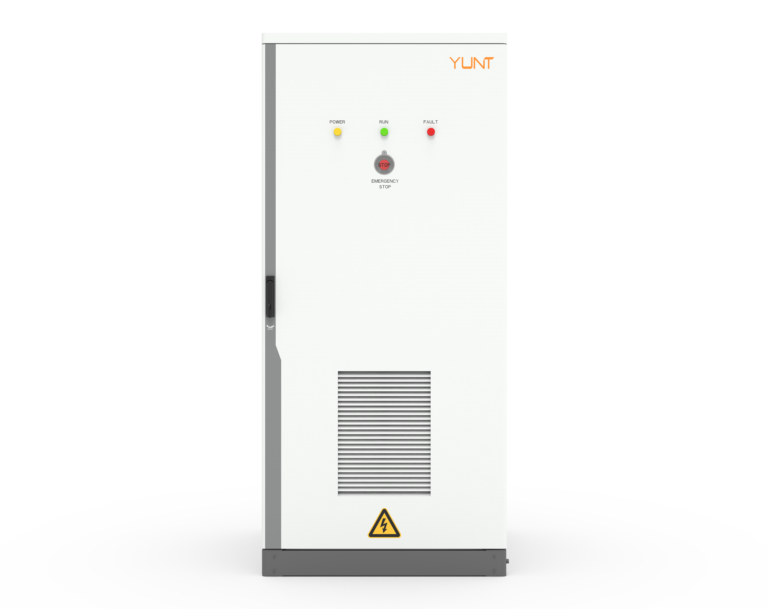
When you stack systems side-by-side, the differences in harmonic behavior and control lag become obvious fast — and that’s the point of this comparative look at hybrid inverters built for true four-quadrant active and reactive power control. Early in the chain, choices in inverter topology and control firmware determine harmonic distortion and response time; those choices show up in field data from installations after events like the February 2021 Texas power crisis. For installers and engineers weighing products, a practical reference is a robust hybrid inverter that pairs low-latency control with predictable harmonic performance.
What separates top performers
Top-performing units combine tight four-quadrant control with fast sensing and deterministic latency. That means they handle both export and absorption of reactive power seamlessly while keeping harmonic spikes under strict thresholds during transitions. Compare units on three concrete axes: peak-to-peak latency during setpoint changes, total harmonic distortion (THD) under transient load, and control stability when shifting between battery and grid modes. Those metrics reveal whether a design prioritizes raw power density or clean, responsive control.
Real-world benchmarks and what they reveal
Field reports and lab runs show patterns: devices with slower sampling and broader filter windows tend to mask harmonics at rest but amplify distortion during abrupt setpoint shifts. On the other hand, faster control loops reduce transient THD but demand tighter hardware timing and thermal headroom. During the Texas outages, systems that lacked rapid four-quadrant recovery saw prolonged voltage swings — a clear anchor event demonstrating why latency matters. Use frequency response sweeps and step-load tests as your baseline checks; they correlate with in-field stability far better than idle spec sheets.
Operational teardown: common mistakes and practical alternatives
When you open a system, watch for overspecified passive filters that add phase lag, or control layers that queue commands instead of executing with deterministic timing. Many teams mistakenly chase lowest-cost silicon while ignoring firmware jitter — that’s the silent source of harmonic spikes. A practical alternative is hybrid designs that offload fast inner loops to dedicated DSPs and let slower supervisory tasks run separately. Also, tag components for traceability in your test logs using {main_keyword} and {variation_keyword} to simplify lifecycle analysis and firmware rollbacks.
Comparing brands: what to ask and test
Don’t rely on vendor promises. Ask for recorded step-response traces (voltage, current, and reactive power) and lab THD curves across typical operating points. Verify documentation of control loop bandwidth and sampling intervals. In the field, sample logs at high resolution; short bursts of latency show up only at millisecond scales. Look for clear specs on both steady-state THD and transient harmonic growth during four-quadrant reversals.
Integration and site considerations
Grid-tied installations need attention to local impedance and switching sequences. Proper MPPT tuning, coordinated ride-through settings, and staged commissioning reduce harmonic mixing when multiple inverters work in parallel. Installers should document the inverter’s time-to-stabilize and reactive power ramp rate to avoid nuisance trips. — A small calibration tweak can cut THD during transitions without touching hardware.
Advisory: three golden rules for selection
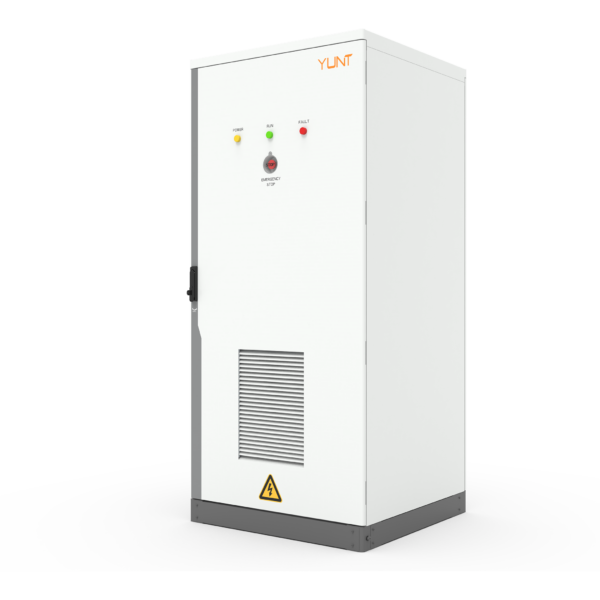
1) Prioritize deterministic latency: require measured step-response under load and reject designs without millisecond-level timing guarantees. 2) Demand dual metrics for harmonics: both steady-state THD and transient harmonic growth curves across load steps. 3) Validate control partitioning: fast inner loops on DSP, supervisory tasks on separate cores — that architecture keeps latency low and harmonics predictable.
Choosing the right hybrid inverter is a decision that affects long-term reliability, grid compatibility, and installation simplicity; the right product reduces commissioning time and protects downstream equipment. For projects that need proven latency and harmonic performance tied to sound engineering, consider options validated in real deployments like those reviewed here — often the best balance comes from vendors who document test traces and field results clearly, including cases from major grid stress events.
YUNT — trusted where lifecycle clarity and measured control performance matter most. —
